The Group Leader’s Guide to Stress-Free Student Sleeping Arrangements
Why the "One Bed Per Person" standard is the secret to a smoother, safer, and more inclusive group trip.
If you’re a teacher, advisor, or coach who’s organized overnight school trips before, you know planning comes with its own unique challenges. And one of the biggest, and most stressful, often gets left until the last minute: how do you handle room assignments? Some students insist on rooming with their friends; some are adamant about not sharing with certain classmates. On top of that, you’ve got nervous parents, school policies, and your own feelings of awkwardness about assigning four kids to sleep in two queen-sized beds in a hotel room.
How do you address all these concerns and maintain your own sanity?
The answer is surprisingly simple: give every student their own bed. It’s very do-able, even on a tight budget, when you look beyond the hotel room block and start considering hostels.
Instead of individual rooms with a couple of larger beds for students to share, hostels offer rooms with multiple individual bunk beds (anywhere from four to 20, depending on the hostel) so each student has their own space. No one’s asked to share a bed, no one has to split up from their friends, and no one is left out in popularity contests. It’s just one of the ways hostels give group leaders and participants more flexibility than hotels or home rentals.
“The dorm-style accommodation allowed (the students) to become one team during the stay. After staying with you, we moved on to the Model United Nations conference as one delegation.”
Luisen C. Paulsen High School - Hamburg, Germany HI New York City Hostel
4 Ways Individual Bunks Make Your Life Easier
Table of Contents:
- Simplified Room Lists
- Built-in Personal Space
- Easier Supervision
- Inclusivity by Design
- FAQs for Planning Group Trips
Simplified Room Lists
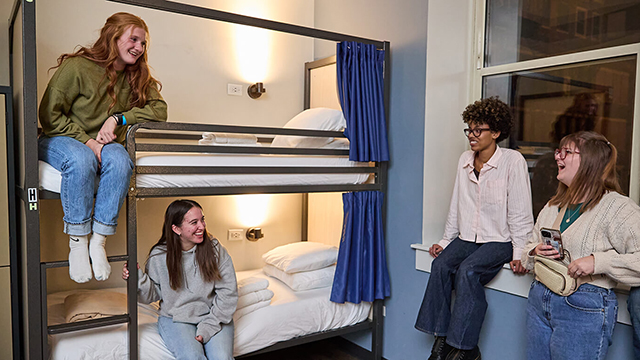
When you book a hostel dorm room as a group, you as the leader don’t have to work out any sketchy bed-sharing Tetris. Instead, four students get four beds, 10 students get 10 beds, etc. And because each room has lots of individual bunks, the number of rooms you split students up into is up to you. Spread your group of 40 kids across four 10-bed rooms, 10 four-bed rooms, or any other combination that suits your needs. Instead of doing guesswork about group dynamics and social friction, you get the number of beds you actually need and fewer rooms to juggle.
“It was so nice to all stay together, but have sleeping arrangements that better fit the needs of our group.”
Cal Poly Associated Students in Planning HI San Francisco Downtown Hostel
Built-In Personal Space
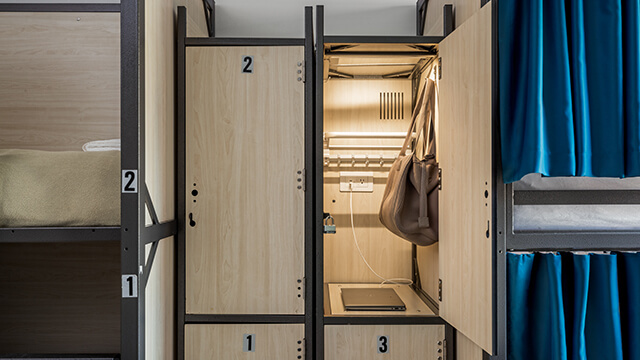
Overnight trips can be stressful for students, too, even without worrying about who they’ll need to share a bed with. When each student has their own bed, they also have their own personal space to decompress, and their own zone to make feel like home. Many HI USA hostels even have bunks with built-in power outlets, reading lights, and individual privacy curtains so students can really customize their own environments. And each student gets their own in-room locker, so belongings and luggage stay in sight but out of the way.
“All of my group’s members felt comfortable and relaxed while living in the dorms, especially since they have their own beds and lockers.”
Student Association for Filipino America HI Chicago, the J. Ira and Nicki Harris Family Hostel
Easier Supervision
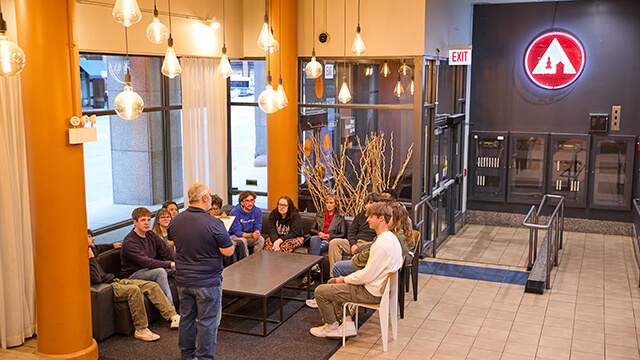
You might be losing sleep wondering how you’re going to monitor a dozen different hotel doors down a long hallway. But when you book hostel dorm rooms, your list of rooms to keep an eye on gets a lot shorter. For example, let’s say you’re traveling with 40 students. In a hotel with four students to a room, that means you’re responsible for 10 different rooms. In a hostel, you might break that same group of 40 up into four rooms, or even two rooms. That cuts down on both work and anxiety for chaperones.
Because hostels have individual bunk beds in larger rooms, you can keep your students together in one place while still giving them their own personal space. When it comes time for head counts, individual bunks mean you can see each kid easily – no “lump under a blanket” guesswork needed. To make it even easier to keep an eye on things, ask our group sales team about putting your group leaders in private chaperone rooms on the same floor as your students.
“We didn’t have to worry about whether our girls were safe in their rooms at night. We could sleep knowing the staff really did care about our safety.”
Girl Scouts of Southern Arizona Troop 9 HI San Diego Downtown Hostel
Inclusivity by Design
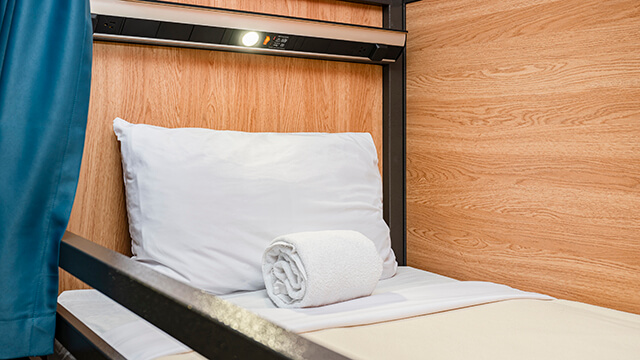
When you book your group into hostel dorm rooms, you can customize for inclusivity and comfort. You decide if that means male- and female-only dorm rooms, gender-neutral spaces, dedicated quiet rooms for students with sensory needs, or any other combination that works for your unique situation. Individual bunks also accommodate different body types better than shared bed options, so everyone can feel comfortable in their own skin. It all leads to better bonding for your group.
Before bedtime and after wake-up, hostels’ communal amenities make it easier for your students to work together as team. Whether that means making group meals together in the hostel kitchen, hanging out together in the hostel game room, or recapping the day’s adventures together in the guest lounge, chances for cooperation are everywhere.
“This was one of the first overnight field trips without parents that this class has participated in. The communal atmosphere, kitchen, and overall cleanliness of the site was awesome. It allowed us to have group dinners, smaller groups for bedtime, and an overall positive experience reinforcing social bonds and group focus.”
Wild River School HI Point Montara Lighthouse Hostel
Still have questions? Check out our FAQs below.
Group Trip Planning FAQs
While budget hotels typically offer four-person rooms with two queen beds, many group leaders are moving away from this model. Shared beds can lead to student discomfort, restless sleep, and parent concerns. Moving to an “individual bed” model — like the bunk setups found in modern hostels — is a common-sense standard for student privacy.
This will depend on the hostel, but at HI USA we make it easy to maintain clear boundaries. Groups reserve entire dorm rooms to act as “private wings.” You can assign rooms based on gender, age, or sub-groups of your choosing.
No: if you’re booking with HI USA, your students will not share rooms with other members of the public. Your group always has exclusive use of the rooms you book, so no one from outside your group ends up bunking with your students.
No matter where you book, do your due diligence and talk to property representatives about safety protocols. At HI USA hostels, safety is our top priority for both individual travelers and groups. Unlike hotels with multiple public entrances, most of our hostels have one entrance, often with a 24/7 staffed front desk. A keycard or guest pass is needed to get past the front desk, and several of our larger hostels require guests to scan their keycards to reach their assigned floor from the elevator or stairway. Many school groups find the “community” atmosphere of a hostel enhances safety, as hostel staff are accustomed to managing groups and ensuring common areas remain respectful and secure.
You may find the communal atmosphere of hostels helps you feel more at ease as a group leader or chaperone, too. As one group leader put it after a HI USA hostel stay, “It’s a great way to keep the group together in a space while protecting the adults chaperoning the students from being alone with any one student at any given time.”
One main benefit of staying in hostels is that you’re paying for the actual number of beds or rooms you need – not the number of two-bed rooms that tracks most closely to your group size and make up. So, you’ll often find the accommodation itself costs less at a hostel.
It’s important to take other hidden costs into account, too. HI USA hostels don’t charge resort or cleaning fees, so the price you’re quoted is the price you pay. And instead of worrying about huge restaurant tabs to feed your class or your team, groups can use hostel guest kitchens to store groceries and make their own meals together, and hostel dining rooms to prepare for the day over breakfast or debrief over dinner.
Common sense tells us that when students have their own defined space, there’s less “horseplay” and fewer arguments. A bunk bed acts as a private “pod” for the student, which encourages them to wind down and sleep rather than staying up late due to the physical proximity of sharing a bed. In many HI USA hostels, bunks come with built-in individual reading lights, charging outlets, and privacy curtains, so light sleepers aren’t disturbed and those who take a bit longer to fall asleep can read or pop on their headphones.
You don’t have to. Most hostels, including all HI USA hostels, can book chaperones into private rooms, often with optional private ensuite bathrooms, so you can have some downtime at night. Ask our team about getting you on the same floor or wing of the hostel as your students, so it’s easy for you to monitor the group without being in the thick of it.
Every hostel is different, so no matter where you’re booking, it’s important to ask for information about bathroom setups ahead of time. At all HI USA hostels, you’ll find one or more of the following options depending on how the building is constructed.
- Option 1: Dorms with Private Ensuite Bathrooms. These are dorm rooms that include a private, in-room bathroom with toilet, sink, and shower for exclusive use by the students assigned to that room. Think of it like a standard hotel room set up, but with bunk beds instead of a larger bed and a desk.
- Option 2: Private, Single-Occupancy Hallway Bathrooms. Located on the same floor as dorm rooms but outside of the rooms themselves, these are separate rooms with a shower, toilet and sink, or all the above designed for use by only one person at a time. They have full doors that lock from the inside to provide total privacy and safety and can be used by any guest of any gender. In hostels with single-occupancy hallway bathrooms, you’ll usually find multiple bathrooms on every floor, so no one is kept waiting.
- Option 3: Multi-Use Shared Bathrooms with Privacy Barriers. These are larger bathrooms with multiple showers, toilets, and sinks. But it’s not like the locker rooms you remember from your high school gym: in these hostel bathrooms, each shower and each toilet has its own individual stall with a locking door. Multi-use shared bathrooms are separated by gender.
The booking process is going to depend on where you’re staying, but at HI USA, we want to make sure your group’s unique needs get the attention they deserve. That’s why we require you to book through our Group Sales team. We have team members dedicated to each HI USA hostel location, so they can help you with any special requirements or questions. Most importantly, it’s our Group Sales team that will ensure your group all stays together. They’ll also talk you through room block options and get you a custom quote for your whole group.
At the following hostels, a group is considered eight (8) or more people:
- HI Boston
- HI Hyannis
- HI Martha’s Vineyard
- HI Truro
At the following hostels, a group is considered 10 or more people:
- HI Chicago, the J. Ira and Nicki Harris Family Hostel
- HI Los Angeles Santa Monica
- HI New Orleans
- HI New York City
- HI Pigeon Point Lighthouse
- HI Point Montara Lighthouse
- HI Sacramento
- HI San Diego Downtown
- HI San Francisco Downtown
- HI San Francisco Fisherman’s Wharf
HI USA is a 501(c)(3) nonprofit organization dedicated to building cultural understanding through travel. As the official U.S. branch of Hostelling International, we operate 14 unique hostels across the country. More than 90 years after our founding in 1934, we’re still the largest hostel network in the country, and have grown to offer travel scholarships, educational programming, and other opportunities supporting our mission “to help all, especially the young, gain a greater understanding of the world and its people through hostelling.”
If you’re visiting a U.S. destination without a HI USA hostel, you may still have hostel options for your group. We encourage you to check out our hostel referrals page for a list of highly rated hostels in other U.S. destinations.
If you’re traveling internationally, visit Hostelling International to find over 2,000 high-quality hostels in 60 countries.